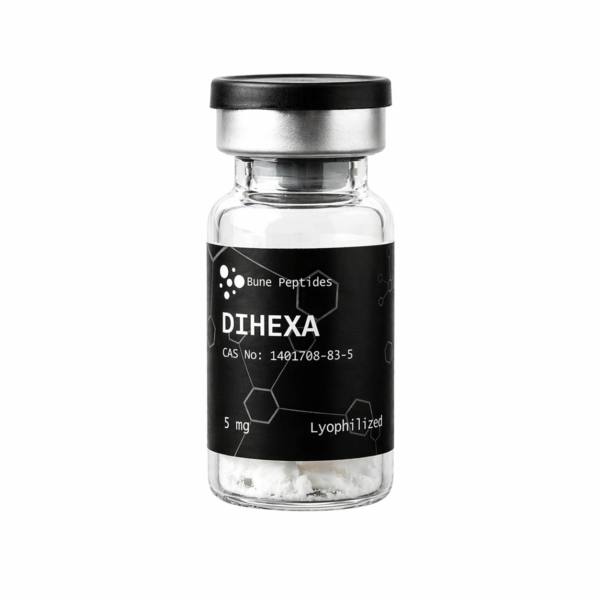
Dihexa – Advanced Cognitive Research Peptide for Synaptic Plasticity Studies
Dihexa is a synthetic investigational peptide extensively studied in neuropharmacology and cognitive research for its potential role in synaptic plasticity, neurogenesis, and neural pathway development. Recognized for its unique biological activity, Dihexa has become a prominent compound in laboratory investigations focused on learning, memory formation, and neurodegenerative disease models.
Preclinical studies suggest that Dihexa may influence pathways associated with neuronal growth and synapse formation, processes closely linked to long-term cognitive function and neural communication. Due to these mechanisms, researchers continue exploring its potential relevance in studies involving age-related cognitive decline, Alzheimer’s disease models, and other neurological conditions affecting memory and cognition.
Dihexa has attracted significant interest for its reported interaction with hepatocyte growth factor (HGF)/c-Met signaling pathways, which are believed to play a role in neuronal connectivity and synaptic remodeling. Ongoing investigations aim to better understand its biological activity, stability, safety profile, and broader applications within advanced neuroscience research.
Key Research Areas
• Synaptic plasticity and neurogenesis research
• Cognitive performance and memory studies
• Neural pathway development investigation
• Neurodegenerative disorder models
• Learning and long-term potentiation (LTP) research
• Alzheimer’s and age-related cognitive decline studies
Research Grade Information
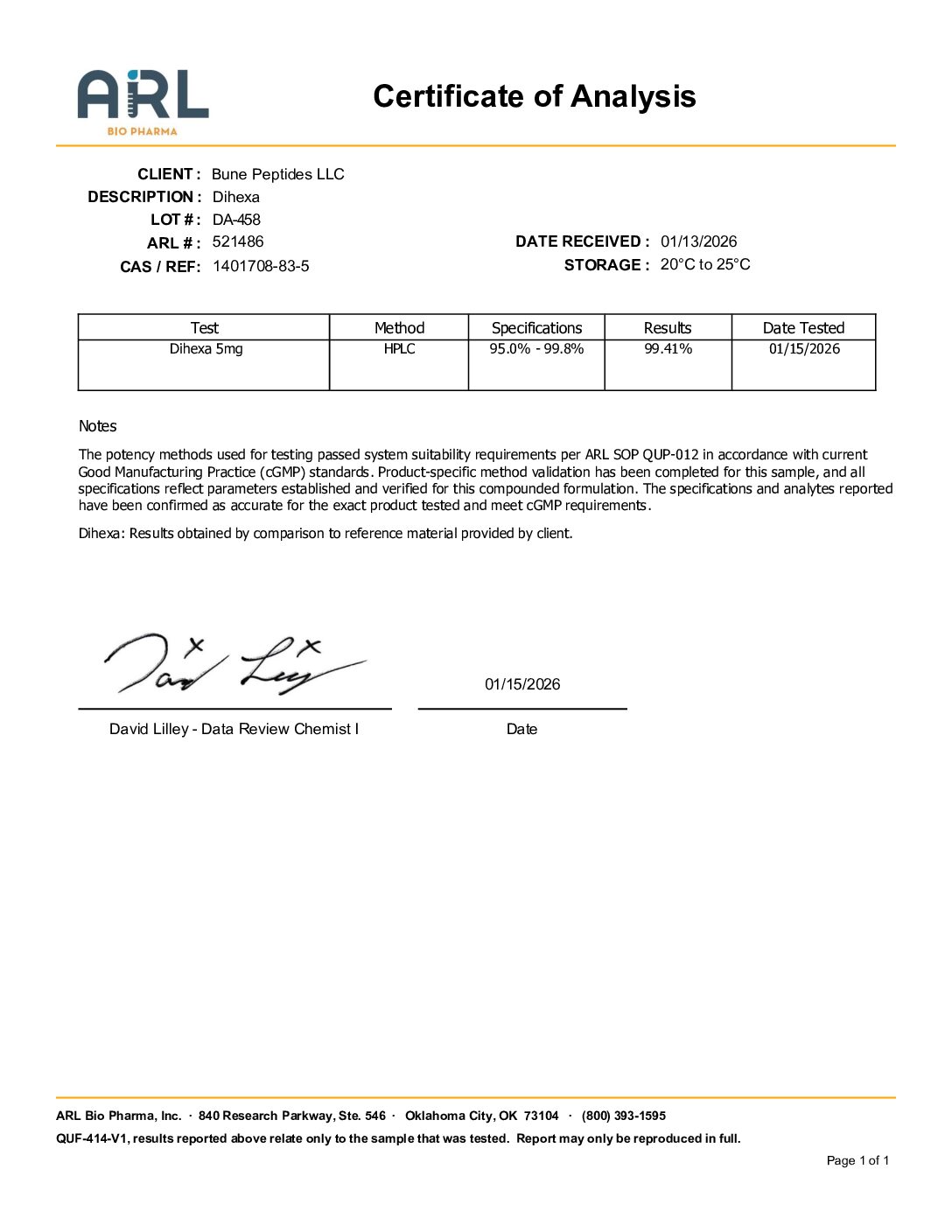
• High-purity research compound
• Manufactured for laboratory and analytical research applications
• Intended for qualified research environments only
Important Notice
This product is intended strictly for laboratory research purposes only. Not for human consumption, medical use, or veterinary use. This compound is not intended to diagnose, treat, cure, or prevent any disease.